
The RAM Crisis Is Reshaping Tech – And Consumers May Feel It Everywhere

The RAM Crisis Is Reshaping Tech – And Consumers May Feel It Everywhere
Over the past few months, the computing industry has undergone a noticeable shift. While advances in AI-powered processors promise faster and more capable devices, a growing memory shortage is quietly pushing up prices across the entire tech ecosystem.
At the center of it all is one key factor: artificial intelligence.
As AI development accelerates, memory manufacturers are redirecting production toward high-demand AI data centers. The result is tightening supply for consumer-grade memory — and rising costs that are beginning to affect everyday devices.
AI's Growing Appetite for Memory
Artificial intelligence systems require enormous amounts of high-performance memory to train and operate large models. To support this demand, major memory producers have shifted priorities toward enterprise customers building AI infrastructure.
Companies like Micron Technology have indicated that DRAM shortages could persist for an extended period. That shift is already influencing pricing trends across the broader market.
Meanwhile, chipmakers such as Intel continue pushing forward with new AI-enhanced processors, including its latest Core Ultra series designed to improve on-device AI capabilities and integrated graphics performance. But even as performance improves, the cost of supporting components — particularly memory — is rising.
Industry observers suggest that existing laptop inventories may cushion immediate price spikes for several months. However, once current stock runs low, consumers could begin to see noticeable increases.
RAMageddon: A Sharp Price Climb
The memory crunch has been dramatic. In some cases, 32GB DDR5 RAM kits that previously sold at affordable prices have increased several-fold within months. Reports indicate that both DRAM and NAND storage prices have surged significantly, in some instances by hundreds of percent.
For PC builders and hardware enthusiasts, the impact is immediate. But even for consumers who never purchase RAM directly, the consequences are harder to avoid.
Modern devices — smartphones, tablets, gaming consoles, Wi-Fi routers, and laptops — all rely heavily on memory. When memory costs rise, manufacturers often pass some of that increase along to buyers.
Recent price adjustments across major gaming consoles such as the PlayStation 5, Xbox Series X, and Nintendo Switch have already raised concerns among consumers about long-term affordability in tech and gaming.
Gaming at a Crossroads
Gaming may be one of the clearest examples of how the RAM crisis could influence consumer behavior.
High-performance gaming systems require substantial memory and storage. As component costs climb, building or purchasing a powerful gaming PC becomes increasingly expensive. Even consoles — traditionally seen as cost-controlled platforms — are not immune to broader supply chain pressures.
If hardware prices continue to rise, some consumers may begin exploring alternatives.
One option is cloud gaming. Instead of owning powerful local hardware, users stream games from remote data centers. For a monthly subscription fee — often in the range of $20 to $30 — players can access high-end gaming performance without purchasing expensive machines.
Cloud gaming services have improved in reliability and accessibility over the years. However, they depend heavily on stable, high-speed internet connections and may not fully replace the experience of playing on dedicated local hardware for all users.
Still, as upfront hardware costs grow, subscription-based access to computing power becomes more economically attractive.
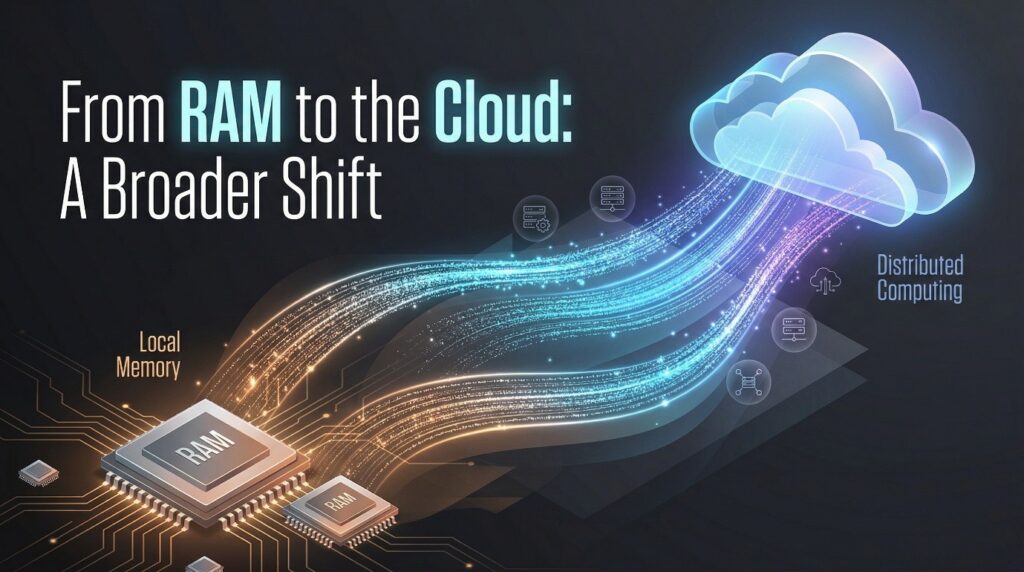
From RAM to the Cloud: A Broader Shift
The implications of memory shortage extend beyond gaming.
If consumer hardware continues to become more expensive, cloud computing could play a larger role in everyday digital life. Rather than upgrading devices every few years, users may rely more on cloud-based services for tasks that once required high local processing power — including gaming, AI tools, creative software, and data storage.
Ironically, the same AI-driven demand that is contributing to the memory shortage is also accelerating the expansion of cloud infrastructure worldwide.
For consumers, this creates a complex tradeoff. On one hand, AI innovation is delivering smarter devices and new capabilities. On the other hand, the infrastructure required to power AI may be indirectly increasing the cost of personal technology.
What Happens Next?
Some analysts believe current inventory levels may delay the full impact of the price surge for several months. But if memory manufacturers continue prioritizing AI-focused production, consumer electronics pricing could face sustained pressure.
The situation does not necessarily signal a permanent shift away from local hardware. Technology markets are cyclical, and supply constraints may eventually stabilize.
For now, however, the RAM crisis highlights how interconnected today’s technology ecosystem has become. A surge in AI demand at the data center level can ripple outward — affecting everything from laptops and phones to gaming consoles and cloud services.
For consumers, the message is less about panic and more about awareness. As AI continues to reshape the industry, its impact may not just be seen in smarter software — but also in the price tags attached to everyday devices.