
AI Boom Strengthens Southeast Asia’s Economic Growth
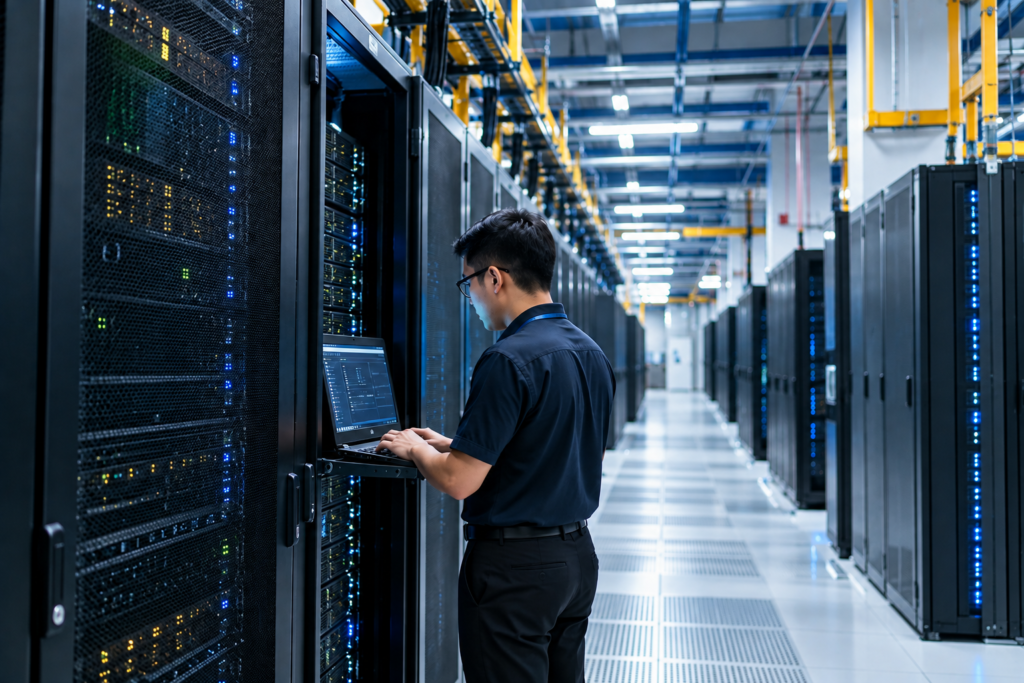
Southeast Asia is demonstrating greater economic resilience than previously expected as growing demand for artificial intelligence supports technology exports, data centre investment and digital infrastructure development across the region.
The expansion of AI is increasingly having an impact beyond software companies and technology platforms. Building and operating advanced AI systems requires semiconductors, servers, networking equipment, electricity and large-scale data centres, creating opportunities for economies that play important roles within global technology supply chains.
According to Moody’s Analytics, Southeast Asia’s economic outlook has remained relatively resilient despite continued uncertainty surrounding global trade, tariffs and geopolitical risks. AI-related investment and exports have emerged as important sources of support for several economies in the region.
The trend is particularly relevant for technology-oriented economies such as Malaysia, Singapore and Vietnam. These countries have developed significant roles in electronics manufacturing and exports, positioning them to benefit from continued global spending on computing infrastructure.
Malaysia already occupies an important position within the global semiconductor supply chain, particularly in semiconductor assembly, testing and electronics manufacturing. As demand for AI processors and supporting hardware increases, the wider semiconductor ecosystem could provide additional opportunities for Malaysian manufacturers and technology businesses.
At the same time, the rapid development of data centres is creating another channel through which the AI boom is influencing Southeast Asian economies.
AI workloads require enormous computing capacity. Training advanced models and operating generative AI services involves large clusters of specialised processors running inside data centres equipped with sophisticated networking, cooling and power infrastructure.
As technology companies seek additional computing capacity, Southeast Asia has increasingly attracted investment in these facilities. The resulting projects can generate demand for construction, engineering, telecommunications, energy infrastructure and specialised technology services alongside the data centres themselves.
Malaysia has emerged as one of the region’s important destinations for data centre investment. Its position within Southeast Asia, existing digital infrastructure and proximity to Singapore have contributed to growing interest in developing large computing facilities in the country.
This creates opportunities extending beyond the facilities themselves. A larger data centre ecosystem can support cloud computing providers, cybersecurity companies, network operators, software businesses and other digital services that depend on high-performance infrastructure.
Singapore also remains a major regional technology hub, while Vietnam continues to expand its role in electronics manufacturing and global technology supply chains. Together, these economies demonstrate how different parts of Southeast Asia can participate in the infrastructure supporting the global AI industry.
Moody’s Analytics expects ASEAN economic growth to reach approximately 4.8% in 2026, followed by 4.6% in 2027, compared with 4.9% in 2025. While this represents some moderation, the outlook suggests the region continues to demonstrate resilience despite a challenging external environment.
However, the benefits of the AI boom are not distributed evenly across Southeast Asia.
Countries with established electronics manufacturing industries, semiconductor supply chains and strong digital infrastructure are better positioned to capture AI-related investment. Economies that are less integrated into global technology manufacturing may receive fewer direct benefits from increased demand for AI hardware.
Trade policy represents another significant uncertainty. Malaysia, Singapore and Vietnam have benefited from exemptions affecting semiconductor-related trade, but changes to United States tariff policies could create additional pressure for the region’s technology exporters.
Any disruption to semiconductor trade could have consequences extending well beyond chip manufacturers. Modern AI infrastructure relies on complex international supply chains involving processors, memory, storage, networking equipment and specialised manufacturing services.
Energy prices are another risk highlighted in the regional outlook. This is particularly relevant to AI infrastructure because large data centres require substantial and continuous electricity supplies.
The rapid expansion of computing facilities therefore creates both an economic opportunity and an infrastructure challenge. Governments seeking to attract AI investment must consider whether electricity grids can support additional demand while maintaining reliability and progressing towards sustainability objectives.
Water consumption and cooling requirements can also become important considerations as data centre clusters expand. New facilities may increasingly need to demonstrate not only computing performance but also efficient resource use and responsible environmental management.
These pressures illustrate an important feature of the AI boom: artificial intelligence is becoming an infrastructure industry as much as a software industry.
Behind every AI chatbot, image generator and enterprise AI application is a physical network of processors, servers, fibre connections, power systems and cooling equipment. As global adoption increases, investment in this underlying infrastructure is becoming an increasingly important economic force.
For Southeast Asia, the opportunity lies in capturing more of that technology value chain.
Semiconductor manufacturing, advanced electronics, data centres, cloud services, cybersecurity and digital connectivity can potentially form an interconnected regional ecosystem supporting both international technology companies and growing domestic digital industries.
Developing the necessary workforce will be equally important. Engineers, cybersecurity professionals, data centre technicians, semiconductor specialists and AI developers will be required as the region’s technology infrastructure becomes more sophisticated.
Governments and businesses may therefore need to complement infrastructure investment with education, technical training and workforce development. Without sufficient skilled workers, countries could struggle to capture the higher-value opportunities created by expanding AI investment.
The regional AI boom also arrives alongside broader economic risks. Higher energy costs, changing trade policies and weaker demand in some markets could still affect Southeast Asia’s growth trajectory.
For that reason, AI should not be viewed as a guarantee of sustained economic growth. Instead, it represents an emerging source of investment and export demand that can strengthen economies already positioned within global technology networks.
Malaysia is among the countries with an opportunity to benefit from this transition. Its semiconductor industry, electronics manufacturing capabilities and growing data centre sector provide several entry points into the infrastructure supporting global AI development.
The longer-term opportunity will depend on whether Malaysia and its Southeast Asian neighbours can move further up the technology value chain rather than relying primarily on infrastructure construction or lower-value manufacturing.
If the region can combine semiconductor expertise, digital infrastructure, reliable energy, skilled talent and supportive technology policies, the current AI investment cycle could contribute to a broader transformation of Southeast Asia’s digital economy.
The AI boom may have started with rapid advances in software and computing models, but its economic impact is increasingly visible in factories, semiconductor supply chains and data centres. For Southeast Asia, that shift could make artificial intelligence an important contributor to the region’s next phase of technology-driven growth.