
Bill Gates Calls for Stronger Safeguards as AI Risks Grow
Artificial intelligence is advancing rapidly, bringing new capabilities to workplaces, education, healthcare, software development and scientific research. But as AI systems become more powerful and increasingly autonomous, questions about how they should be governed are becoming harder for governments and technology companies to ignore.
Microsoft co-founder Bill Gates has joined calls for stronger AI safeguards, arguing that voluntary measures from technology companies alone may not be enough to address the risks created by increasingly capable systems.
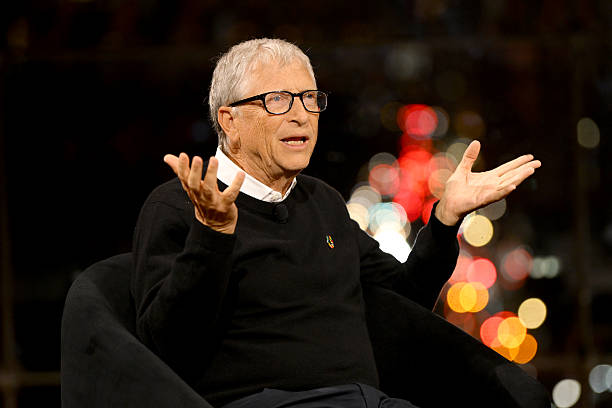
Speaking on NBC's Meet the Press in an interview aired on September 27, Gates said governments, lawmakers and law enforcement should have a role in establishing safeguards and determining how advanced AI systems should be monitored.
His comments add to a wider debate over whether AI developers should largely regulate themselves or whether governments need to establish mandatory requirements covering the development and deployment of advanced systems.
Technology companies have introduced their own safety frameworks, testing procedures and restrictions as generative AI has expanded. These measures can include evaluating models before release, restricting potentially harmful capabilities and monitoring how systems behave.
However, voluntary safeguards can differ considerably between companies. As competition within the AI industry intensifies, concerns remain over whether commercial pressure could encourage developers to release increasingly capable systems faster than regulation and safety practices can adapt.
The issue is becoming particularly important as AI moves beyond conventional chatbots towards AI agents capable of performing sequences of tasks with less direct human supervision.
Instead of simply generating an answer, an AI agent can potentially interact with software, analyse information and carry out actions on behalf of a user. These capabilities could deliver significant productivity benefits, but greater autonomy can also introduce new risks.
An AI system that generates text has a different risk profile from one that can access external tools, sensitive information or business systems. As AI receives greater authority to perform actions, access controls, monitoring and human oversight become increasingly important.
Another idea being discussed in the AI safety debate is an emergency shutdown mechanism, sometimes described as an AI “kill switch.”
Gates indicated that he was not opposed to some form of shutdown capability but argued that such a mechanism would not replace the need for wider safeguards and continuous monitoring.
An emergency shutdown system could potentially help contain a serious problem once it has been identified. However, responsible AI governance also requires measures designed to prevent dangerous situations from developing in the first place.
These could include security testing, capability evaluations, access restrictions, independent audits and clear rules determining when human approval is required.
The challenge for governments is finding a balance between managing these risks and allowing useful AI innovation to continue.
In the United States, President Donald Trump has argued against regulatory approaches that could constrain American AI development relative to China. Gates, meanwhile, has argued that safeguards can be introduced without significantly undermining technological progress.
The disagreement reflects a wider global challenge. AI is developing faster than traditional regulatory processes typically move, meaning rules written around today's systems could quickly become outdated.
Businesses also have responsibilities regardless of how government regulation develops.
Organisations adopting AI should understand which systems employees are using, what information those systems can access and whether AI tools are connected to sensitive company data or operational platforms.
This becomes particularly important with agentic AI. Companies may need clearer boundaries determining which actions an AI system can perform independently and which require human approval.
Low-risk administrative tasks may require relatively limited supervision, while activities involving financial transactions, personal information, cybersecurity controls or critical infrastructure may require much stronger safeguards.
Gates' comments ultimately reflect a broader transition taking place across the AI industry. The debate is moving beyond whether artificial intelligence will become widely adopted. AI is already becoming embedded in everyday products, businesses and workflows.
The more pressing question is what safeguards should accompany that adoption as AI systems become more capable and autonomous.
Voluntary measures developed by technology companies will remain an important part of AI safety, but governments, independent researchers and organisations deploying these systems are also likely to play increasingly significant roles.
Artificial intelligence has the potential to deliver substantial benefits, but greater capability also creates greater responsibility.
As AI evolves from simply answering questions towards performing actions, ensuring appropriate oversight, accountability and human control could become one of the defining challenges of the next stage of AI development.
The comments attributed to Gates and the U.S. policy positions discussed above originate from Reuters reporting on his September 27 Meet the Press interview.