
Virtual Entertainment Is Expanding in Southeast Asia — And Malaysia Is Emerging as a Key Testbed
Virtual Entertainment Is Expanding in Southeast Asia — And Malaysia Is Emerging as a Key Testbed
The entertainment industry is undergoing a digital transformation as immersive technologies such as virtual reality (VR), mixed reality (MR), and extended reality (XR) gain traction around the world. From interactive gaming arenas to virtual sports simulators, these technologies are beginning to reshape how people experience leisure and social entertainment.
Recent exhibitions and industry events suggest that Southeast Asia — including Malaysia — is becoming an increasingly important market for these next-generation attractions.
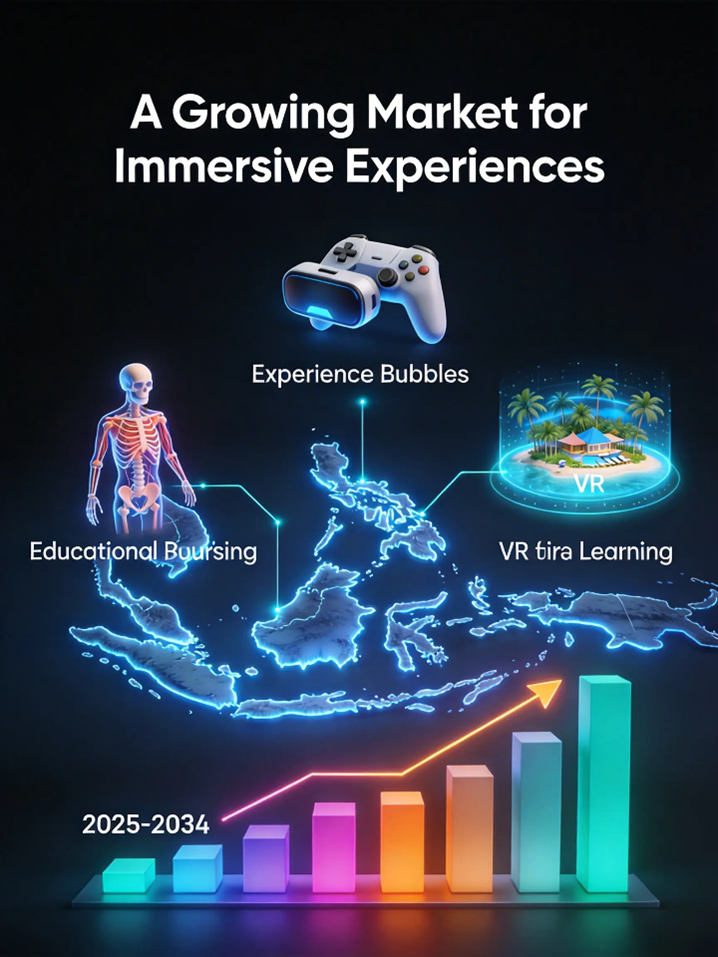
A Growing Market for Immersive Experiences
At the recent GTI Southeast Asia Expo held at the World Trade Centre Kuala Lumpur, companies from across Asia showcased new forms of immersive entertainment designed for malls, amusement parks, and family entertainment centers.
One of the attractions drawing attention was a simulation platform developed by MIXR. The system features a “glass-free 9D flying theatre,” allowing up to eight people to participate in a shared virtual experience inside a dome-shaped environment.
The attraction combines large, curved screens, motion simulation, and immersive visual effects to create the sensation of flying through digital worlds. Developers say the system requires about 50 square meters of space and can be customized with different themed experiences. Other booths showcased virtual sports systems where visitors could try digital versions of activities such as tennis, football, golf, and boxing. These short interactive experiences typically last between 10 and 20 minutes, offering quick entertainment options for visitors in shopping malls or leisure venues.
A Shift in How People Experience Attractions
Industry participants say changing consumer habits are driving interest in these technologies.
Instead of waiting in long lines for traditional amusement rides, many visitors are increasingly drawn to shorter immersive activities that can be installed in smaller spaces. VR-based attractions can deliver high-intensity experiences without requiring the massive infrastructure of conventional theme park rides.
For businesses, the relatively lower installation cost compared with large-scale amusement rides also makes these technologies attractive for malls, arcades, and tourism destinations.
One example highlighted at the expo was a multiplayer VR shooter game called XR Mission Battleworld 2045 developed by Nihon XR Center. Players wear VR headsets and controllers while navigating a digital battlefield filled with robotic enemies and incoming missiles.
The game reportedly attracted tens of thousands of players within its first few months after launching in late 2024, reflecting growing interest in location-based virtual entertainment.
Southeast Asia Becoming an Emerging Hub
Global companies are increasingly looking toward Southeast Asia as a potential growth region for immersive entertainment technologies.
Market research suggests that location-based VR entertainment — including VR arcades and simulation rides — could grow significantly over the next few years as demand for social digital experiences increases. Analysts estimate the global VR arcade market could expand from about $1.9 billion in 2024 to $3.5 billion by 2028.
Cities such as Kuala Lumpur, Jakarta, and Bangkok are becoming key locations for testing these attractions, particularly in shopping malls and family entertainment centers where foot traffic is high.
Industry organizers note that regional events are also attracting visitors and investors from outside Southeast Asia, including the Middle East and Europe, indicating growing international interest in the region’s entertainment market.
The Rise of XR Entertainment
Beyond individual attractions, a broader ecosystem is developing around immersive technologies.
Events like the upcoming Augmented World Expo Asia highlight how XR technologies are expanding beyond gaming into areas such as education, tourism, and training.
These technologies combine digital environments with physical spaces, allowing users to interact with virtual objects, environments, and characters in ways that feel increasingly realistic.
For example, motion-based simulators, immersive dome screens, and multi-user VR arenas allow groups of people to share the same virtual experience — something traditional video games often struggle to replicate.
Opportunities and Challenges Ahead
While immersive entertainment technologies are advancing rapidly, challenges remain. Hardware costs, content development, and the need for reliable infrastructure can still limit widespread adoption.
At the same time, the industry is evolving as developers experiment with different formats, from compact VR kiosks in malls to large-scale interactive arenas.
For countries like Malaysia, these developments could present opportunities to position themselves as regional hubs for digital entertainment innovation.
As immersive technologies continue to mature, experiences that once seemed futuristic — such as virtual sports arenas, interactive simulation rides, and mixed-reality attractions — may become a more common part of everyday entertainment.