
EchoMotion Turns Smartwatches Into Full-EchoMotion Turns Smartwatches Into Full-Body Motion TrackersBody Motion Trackers
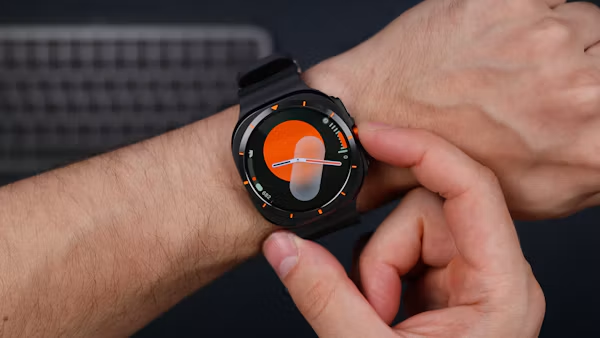
Researchers have developed a new technology that could transform how people interact with augmented reality (AR), virtual reality (VR) and wearable devices by turning an ordinary smartwatch into a full-body motion tracker.
Known as EchoMotion, the system was developed by researchers from Cornell University and the Korea Advanced Institute of Science and Technology (KAIST). It uses ultrasonic sound waves and artificial intelligence (AI) to estimate body movements without requiring external cameras or multiple wearable sensors.
The technology could offer a more accessible alternative to conventional motion-tracking systems, which often depend on specialised equipment to monitor a person's movements.
EchoMotion works by using a smartwatch's built-in speaker to emit ultrasonic signals that are inaudible to humans. These sound waves bounce off different parts of the wearer's body before returning to the watch's microphone.
A lightweight AI model analyses the reflected signals to estimate the positions of 12 body joints, allowing the system to track movements involving the arms, legs and other body parts.
Unlike traditional smartwatch tracking, which primarily measures wrist movement through sensors such as accelerometers and gyroscopes, EchoMotion attempts to understand the position of the entire body using a single wrist-worn device.
The researchers tested the system using an unmodified Samsung Galaxy Watch 6, demonstrating that the technology could operate on commercially available hardware.
During testing with 15 participants, EchoMotion achieved an average joint-position error of less than four inches. After a one-time 12-minute calibration process, the error decreased to approximately 2.4 inches.
The same AI model was also tested on the Samsung Galaxy Watch 7 and Google Pixel Watch 3 without requiring additional training.
Power efficiency is another important advantage.
According to the researchers, the sensing system consumed approximately 12 milliwatts of power, significantly less than a wearable camera-based tracking system. A 30-minute tracking session on the Galaxy Watch 6 used approximately 5% to 6% of the device's battery.
These findings suggest that existing smartwatch hardware could potentially support more advanced motion-tracking applications without major modifications.
For AR and VR, EchoMotion could help developers create more natural interactions by allowing virtual environments to respond to a user's body movements.
Current immersive systems frequently rely on handheld controllers, headset cameras or additional tracking devices. A smartwatch-based approach could reduce the amount of equipment needed for certain applications.
Beyond immersive technology, EchoMotion also shows potential in fitness and physical rehabilitation.
The system could eventually help users monitor exercise movements, count repetitions and receive feedback on their posture. This may support more personalised workout tracking and rehabilitation exercises.
Its camera-free design also offers potential privacy advantages, as body movements can be estimated without continuously recording video of the user or surrounding environment.
However, EchoMotion remains a research project rather than a commercially available smartwatch feature.
The researchers observed some performance limitations in narrow spaces where sound reflections from nearby people affected tracking accuracy. Further testing will be needed to determine how reliably the technology performs across larger populations and different environments.
Although the system has demonstrated promising results, it is not yet a complete replacement for professional motion-capture equipment.
Nevertheless, EchoMotion highlights how AI and existing consumer hardware could make advanced motion tracking more accessible.
As AR, VR and wearable technologies continue to evolve, innovations such as EchoMotion could help reduce hardware complexity while enabling new forms of interaction, fitness monitoring and digital experiences.