
MIT Develops AR System That Could Revolutionize Medical Ultrasound Imaging
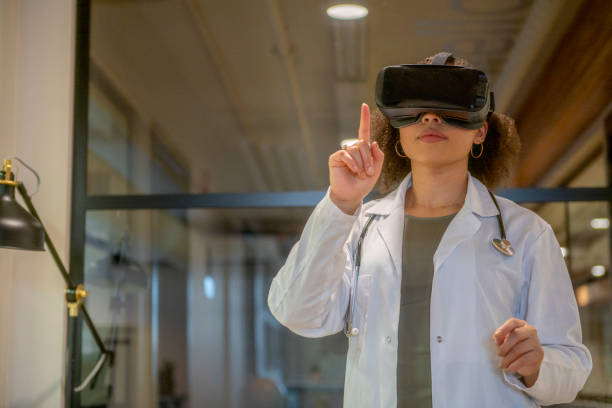
Researchers at the Massachusetts Institute of Technology (MIT) have developed a new augmented reality (AR) system that could make medical ultrasounds significantly easier to perform and interpret. Named AR-VIU (Augmented Reality Volumetric Imaging in Ultrasound), the technology combines real-time 3D ultrasound imaging with augmented reality to provide healthcare professionals with a more intuitive way of visualizing a patient's anatomy during examinations.
Ultrasound is one of the most widely used diagnostic tools in healthcare due to its safety, affordability, and portability. However, interpreting ultrasound images remains a challenging task because clinicians must analyze a series of two-dimensional cross-sectional images and mentally reconstruct them into a three-dimensional understanding of the body. This process requires extensive training and experience, often creating a steep learning curve for new practitioners.
MIT's AR-VIU system addresses this challenge by projecting real-time 3D ultrasound images directly into the clinician's field of view through an augmented reality headset. Instead of switching their attention between the patient and a separate monitor, users can view a life-sized three-dimensional representation of internal structures that appears spatially aligned with the patient's body. This allows clinicians to better understand anatomical relationships while performing scans and procedures.
The system integrates a compact 3D ultrasound probe with a custom imaging pipeline capable of processing volumetric ultrasound data in real time. Using Unreal Engine, the captured data is transformed into an interactive three-dimensional model, which is then displayed through an AR headset. As users move around the patient, they can observe the virtual anatomy from different perspectives, providing a more natural and immersive visualization than traditional ultrasound displays.
To evaluate the effectiveness of the technology, the MIT research team conducted user studies involving 18 participants, consisting of both experienced ultrasound operators and complete beginners. Participants were asked to complete object identification and localization tasks using conventional 2D ultrasound, standard 3D ultrasound displayed on a monitor, 2D ultrasound viewed through augmented reality, and the full AR-VIU system. The results showed that the augmented reality approach delivered the highest overall accuracy, with novice users achieving performance levels that approached those of experienced operators. Although experts remained comfortable with traditional 2D ultrasound due to familiarity, many recognized the potential advantages of AR-assisted imaging for applications such as biopsies, cardiac imaging, and image-guided procedures.
Beyond improving ultrasound interpretation, the research demonstrates the growing role of augmented reality in professional and enterprise environments. While AR is often associated with gaming and entertainment, projects such as AR-VIU highlight how spatial computing can solve real-world challenges by making complex information easier to understand. By reducing the cognitive effort required to interpret medical images, the technology has the potential to improve diagnostic confidence, shorten training time for healthcare professionals, and enhance patient care.
The development also reflects a broader trend in healthcare, where augmented reality is increasingly being explored as a practical tool for visualization, surgical guidance, medical education, and clinical decision-making. Rather than replacing existing medical equipment, AR-VIU enhances current ultrasound workflows by presenting information in a way that is more intuitive and accessible.
As spatial computing continues to evolve, innovations like MIT's AR-VIU demonstrate that augmented reality is becoming more than a visualization technology. It is emerging as a valuable productivity tool capable of improving accuracy, efficiency, and decision-making across industries, with healthcare standing out as one of its most promising applications.