
AR and VR Technologies Are Transforming Education in China
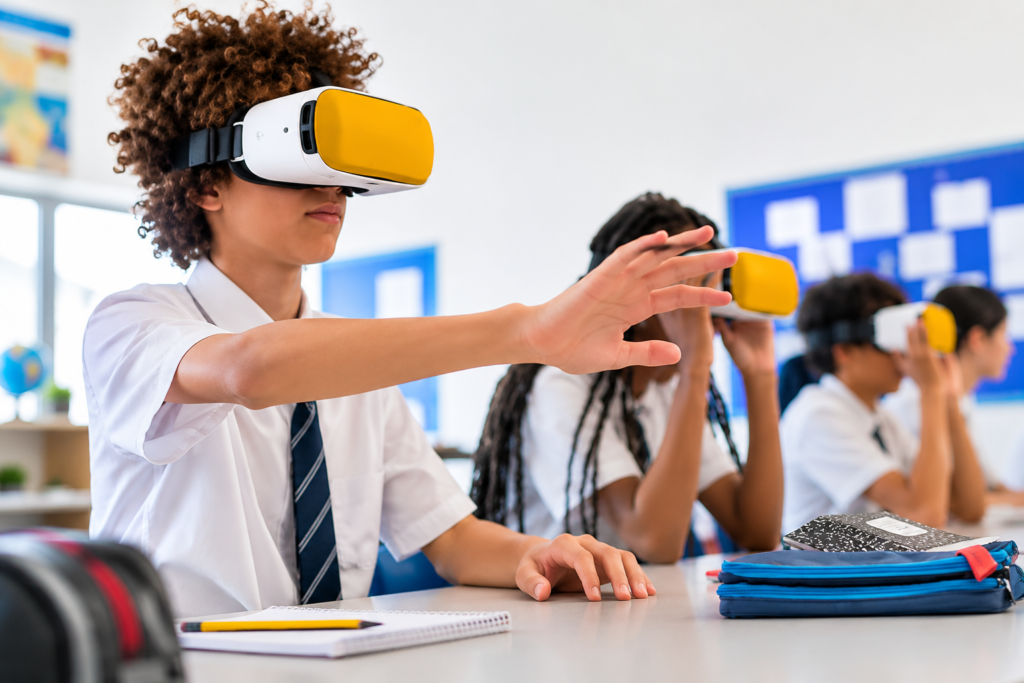
China is accelerating the adoption of augmented reality (AR) and virtual reality (VR) technologies in education, demonstrating how immersive learning tools are reshaping classrooms and training environments.
Educational institutions across the country are increasingly integrating AR and VR into teaching methods to create more engaging and interactive learning experiences. From virtual laboratories to immersive simulations, these technologies allow students to explore complex concepts in ways that traditional teaching methods cannot easily replicate.
VR technology is being used to create realistic virtual environments where students can conduct experiments, participate in practical training, and gain hands-on experience without the limitations of physical resources. Meanwhile, AR applications enable digital information to be overlaid onto real-world objects, helping students better visualize scientific concepts, engineering designs, and other educational content.
The growing use of immersive technologies reflects China's broader push toward digital transformation in education. Schools and universities are leveraging these tools to enhance STEM learning, improve student engagement, and provide access to innovative teaching resources.
Beyond academic settings, AR and VR are also being utilized in vocational training and professional development programs. Simulated environments allow learners to practice real-world skills safely and efficiently, making immersive technologies valuable for workforce preparation and technical education.
As AR and VR hardware becomes more accessible and software ecosystems continue to mature, experts expect adoption to expand further across educational institutions worldwide. China's ongoing investment in immersive learning highlights the potential of XR technologies to support more personalized, interactive, and effective educational experiences.
The trend demonstrates how AR and VR are moving beyond entertainment applications and becoming practical tools for learning, training, and knowledge development in the digital age.